Bringing TORTUS Inside Medicus: What We Learned About Integrated AI in the NHS
Nov 26, 2025
Bringing TORTUS Inside Medicus: What We Learned About Building Integrated AI for the NHS
Last week we quietly reached a milestone that, for us, felt quite meaningful: TORTUS is now natively integrated inside the NHS' newest electronic healthcare record system; Medicus. It’s a small sentence, but it represents a lot of thinking, learning and collaboration between two teams trying to make life easier for clinicians.
Rather than treating this as an announcement, we thought it would be more useful to share how we approached the integration, why we believe integrations like this matter, and what it might mean for organisations considering similar work.
Why integrations really matter
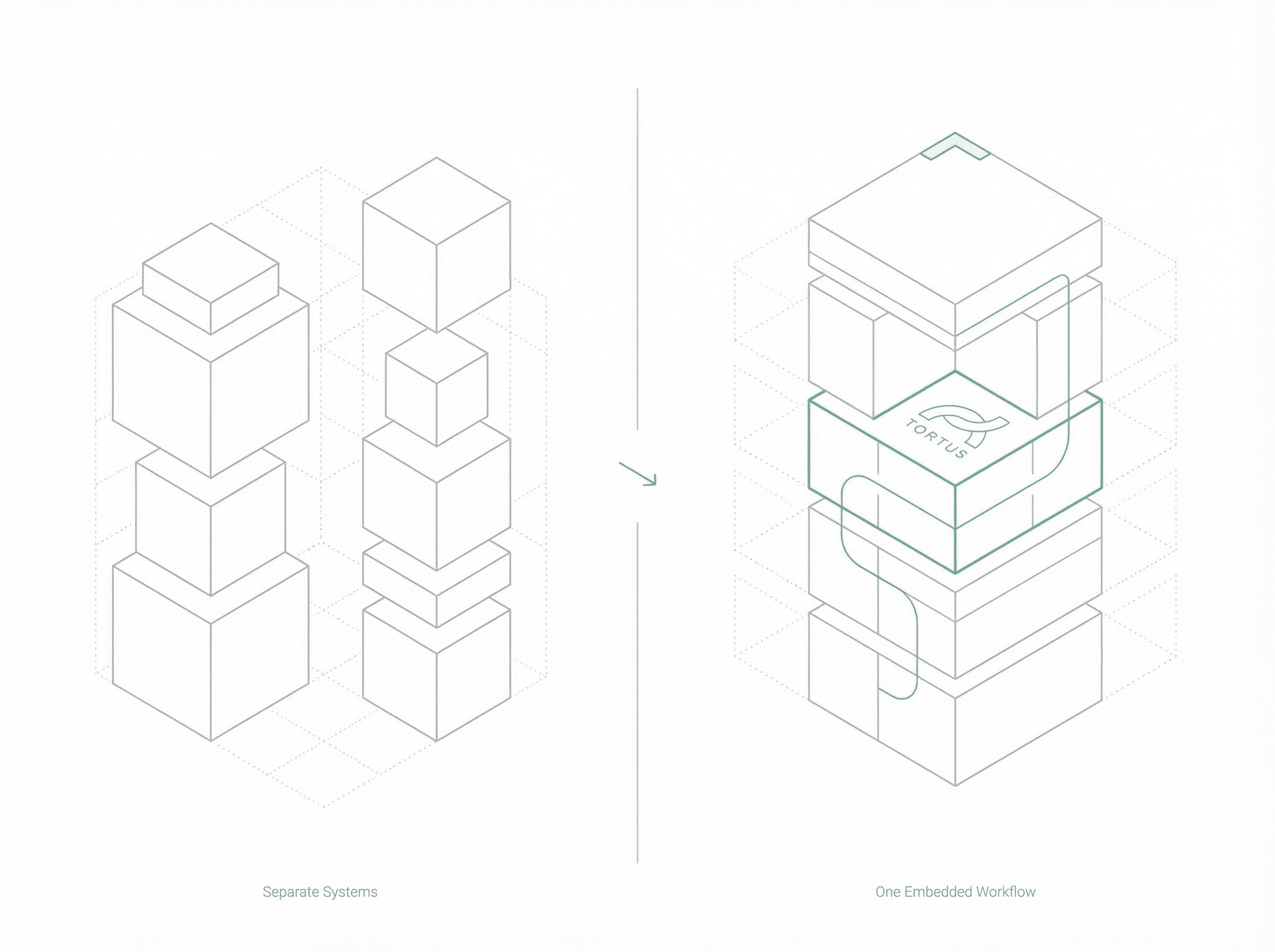
One of the ideas that has guided us from the beginning is that AI should meet clinicians where they already work. It shouldn’t live in a separate app or require a new workflow. Most NHS organisations are now fully digital, and daily clinical practice happens inside EHRs and partner systems like telephony platforms, messaging layers and clinical portals.
This direction isn’t just a preference — it is increasingly becoming a requirement.
The NHS England standards for ambient voice technology make it clear that AVT tools must integrate directly into clinical systems, rather than sit outside them. The goal is simple: patient context should flow safely, documentation should land where it needs to go, and clinicians should not have to swivel between screens.
This guidance has shaped our thinking profoundly.
It is one of the reasons TORTUS chose to rebuild our entire technology stack over the past year so that it is designed for integration — not simply capable of it, but optimised around it.
Why Medicus?
We’ve genuinely enjoyed working with the Medicus team. After our earlier successful launch with X-on Health and Surgery Intellect, we had a clearer sense of what “good integration” ought to feel like in the NHS: low lift, predictable, and respectful of how clinicians already practise.
With Medicus, that thinking came together. The team had TORTUS up and running in around two hours, and the full launch happened in days, not months — something still uncommon in this ecosystem. But that speed reflects deeper foundations: tighter boundaries around what must remain constant in a medical device, a more mature embedded client, and a clearer sense of how partners and TORTUS share responsibilities.
Dr Amar Ahmed, one of the first clinicians to use the fully integrated version, described the experience more accurately than any technical summary:
“It’s a thing of beauty! Doing a natural consultation whilst maintaining eye contact, knowing that the integration is writing my notes and even recording SNOMED codes, is another big milestone. It’s like having an invisible assistant keeping everything accurate and up to date whilst I stay fully focused on the patient.”
Responding to the NHS England AVT requirements: rebuilding TORTUS for integration
For many vendors, AVT tools tend to operate outside the EHR. That is no longer acceptable. The NHS England AVT requirements now explicitly expect:
direct integration
consistent patient context
structured writeback
and embedded operation within clinical systems
To meet this standard properly, we had to rebuild significant parts of TORTUS—including the UI architecture, the processing pipeline and the embedded client—so that:
the UI is fixed, validated and medical-device governed, meaning clinicians get the same safe experience in Medicus, Cerner, Epic, X-on or any future integrated system;
the data model is structured for interoperability, not just export;
the agent layer can run inside any host system without compromising safety;
and the embedded client is lightweight, predictable and quick to deploy.
In effect, TORTUS is now built first and foremost to be embedded — not only into partner platforms like Medicus, but deeply into EHRs themselves.
This is the direction the NHS is signalling, and once again we are setting the standard for enterprise-grade AI from the start.
Clear roles: the medical device inside, and the partner outside
Something that external advice has made even clearer is that when TORTUS is embedded in another system, the roles become more distinct:
TORTUS remains the medical device. Our UI, safety flows and behaviour are validated and regulated. That consistency is part of our safety case and part of our usability criteria.
A clinician should not have to relearn the assistant just because the host system changes.
The partner becomes the integrator and distributor. They manage the workflow around TORTUS — authentication, patient context, navigation and operational fit. They deploy the device into their environment; we provide the AI capability within it.
This structure has made integrations more predictable and has given clinicians something stable: the same agent, behaving in the same way, in any workflow.
How the integration actually works
TORTUS sits inside Medicus via a lightweight embedded client. The clinician opens a patient record, begins their consultation, and TORTUS quietly structures the documentation in the background. Nothing is written back until the clinician approves it.
There are no pop-ups.
No new windows.
No duplicate entry.
Just one continuous workflow.
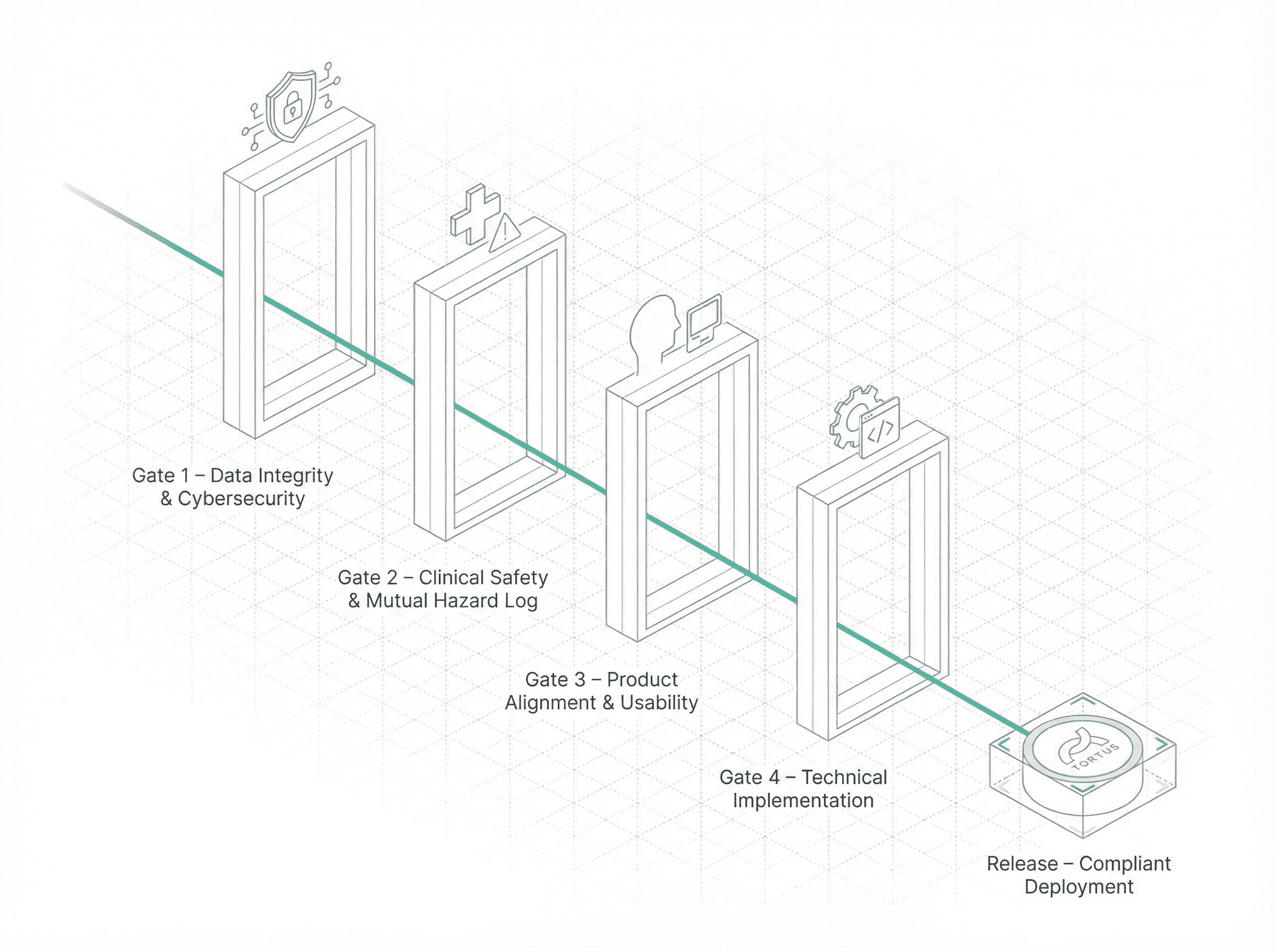
Each partner goes through a shared assurance process — data integrity, clinical safety, product usability and technical implementation. The specifics of the implementation and system may vary, but the safety bar does not.
A few reflections on pricing and collaboration
We’ve also simplified the commercial model so that partners pay for usage, not large up-front commitments. It mirrors modern API pricing and aligns naturally with where value is created.
The future: expanding the TORTUS Partner Programme
The Medicus work has shaped our thinking in a lasting way. Integrated AI doesn’t need to be heavy or disruptive. It can be quiet, calm and almost invisible when the design is right.
We’re now expanding our Partner Programme to support:
deeper technical co-development
richer access to custom data models in the SDK
shared roadmap work
and broader EHR and platform integration pathways
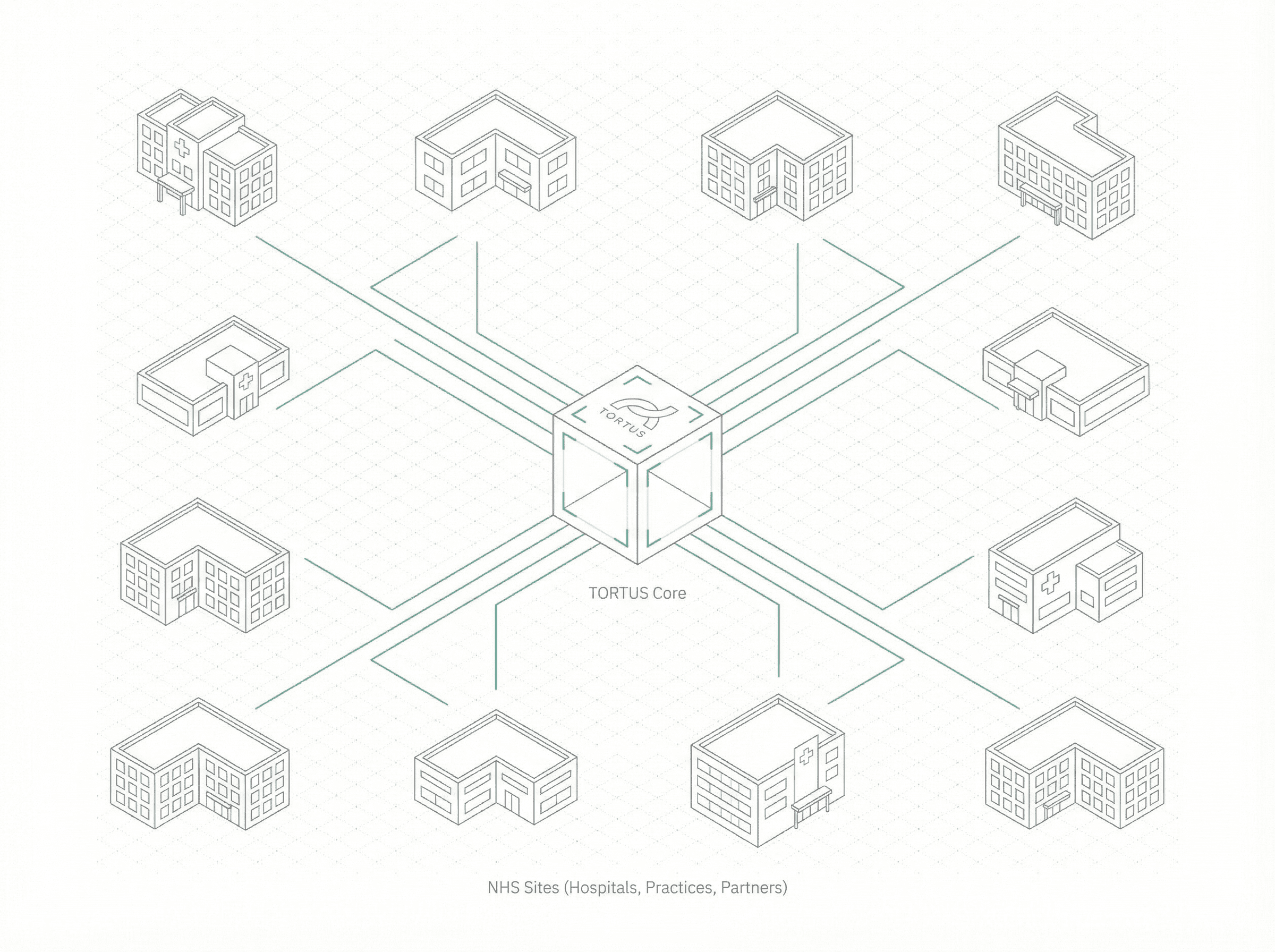
The goal is simple: an AI assistant available to every clinician, in any workflow, anywhere in the world.
If your organisation is exploring ambient voice technology or considering how to introduce AI into existing clinical workflows, we’d be very happy to share what we’ve learned. You can reach us at commercial@tortus.ai.
For those who want the technical detail, the embedded client is here:
https://github.com/orgs/tortus-ai/packages/npm/package/embed-client